Taskrivet brings terminal sessions, coding tools, context, and failure records into one desktop workspace. Explore how the pieces fit together—and where the system still needs human judgment.
A recorded failure, expired lease, exhausted reported budget, or three identical checkpoint evidence entries blocks ledger progress. The operator reconciles the worker and records a reason before retry. Retry returns the task to Ready; it preserves failure history and cumulative reported usage. Starting again still checks the remaining budget and resource ownership.
PLANNED AUTOMATION
Recover intelligently within limits.
The intended executor will classify the blocker, use bounded recovery attempts, change tools or approach when justified, and work on another eligible ticket when progress is unavailable. Scoped authority, verification, and source-owned acceptance must be enforced before this becomes autonomous behavior.
This is the local ledger lifecycle, not proof of external ticket completion. Finish requires a checkpoint and evidence; an explicit acceptance decision is separate. Cancellation is also supported from Ready, Blocked, and Review—the map shows the latter two paths. A blocked or cancelled ledger record does not itself terminate a process.
03 / Follow the work
From a ticket to a traceable result.
Select a step to see its purpose, current behavior, and execution boundary.
IMPLEMENTED FOUNDATION
Start with the source of truth.
The optional ticket preview reads a bounded page from an explicitly configured local ticket service. It shows source state, readiness, and known holds. Taskrivet also has its own local coordination ledger.
Reading a ticket does not claim it or authorize execution. Automatic ticket selection and atomic source claims remain planned.
A private adapter can write a repository activity digest into an explicitly mapped existing ticket. Revision checks and independent readback preserve source ownership and expose conflicts.
EXPLICIT PUBLICATION
Share deliberate summaries.
An outbox binds a selected public summary to an issue and publication key. It checks the author and exact content, verifies delivery, and avoids blind retries after an uncertain send.
Polling is bounded and can miss activity. Suggested response categories guide review; they do not automatically execute contributions, merge changes, create tickets, or mark work Done. Full per-issue lifecycle synchronization and webhook delivery remain planned.
05 / A truthful status
What works today. What comes next.
AVAILABLE IN THE ALPHA
Embedded terminals with a standalone local session service.
Session reconnection after desktop quit; service failure or reboot is not recoverable.
Tool discovery across installed executables, with 26 coding-agent command-name profiles.
Bounded context, checkpoints, resource claims, and recurring-failure records.
GitHub receipts and review categories, plus optional app-open polling and a private ticket adapter.
PLANNED / NOT YET PROVEN
Automatic execution of eligible tickets with qualified tools and scoped access.
Measured routing based on actual quality, latency, entitlement, and cost.
Complete activity handling using webhooks and source-specific reconciliation.
Verified automatic acceptance and intelligent bounded recovery.
Signed desktop distribution and live outbound issue-delivery qualification; the release run encountered GitHub content-creation throttling.
06 / Inspect the evidence
Built to be checked.
Validation results describe this release. They do not establish universal coverage or autonomous completion.
Inspect current CI
Python checks run on Linux and macOS, alongside desktop tests and packaging. Open the exact run and revision for its results; a past release count is not current validation.
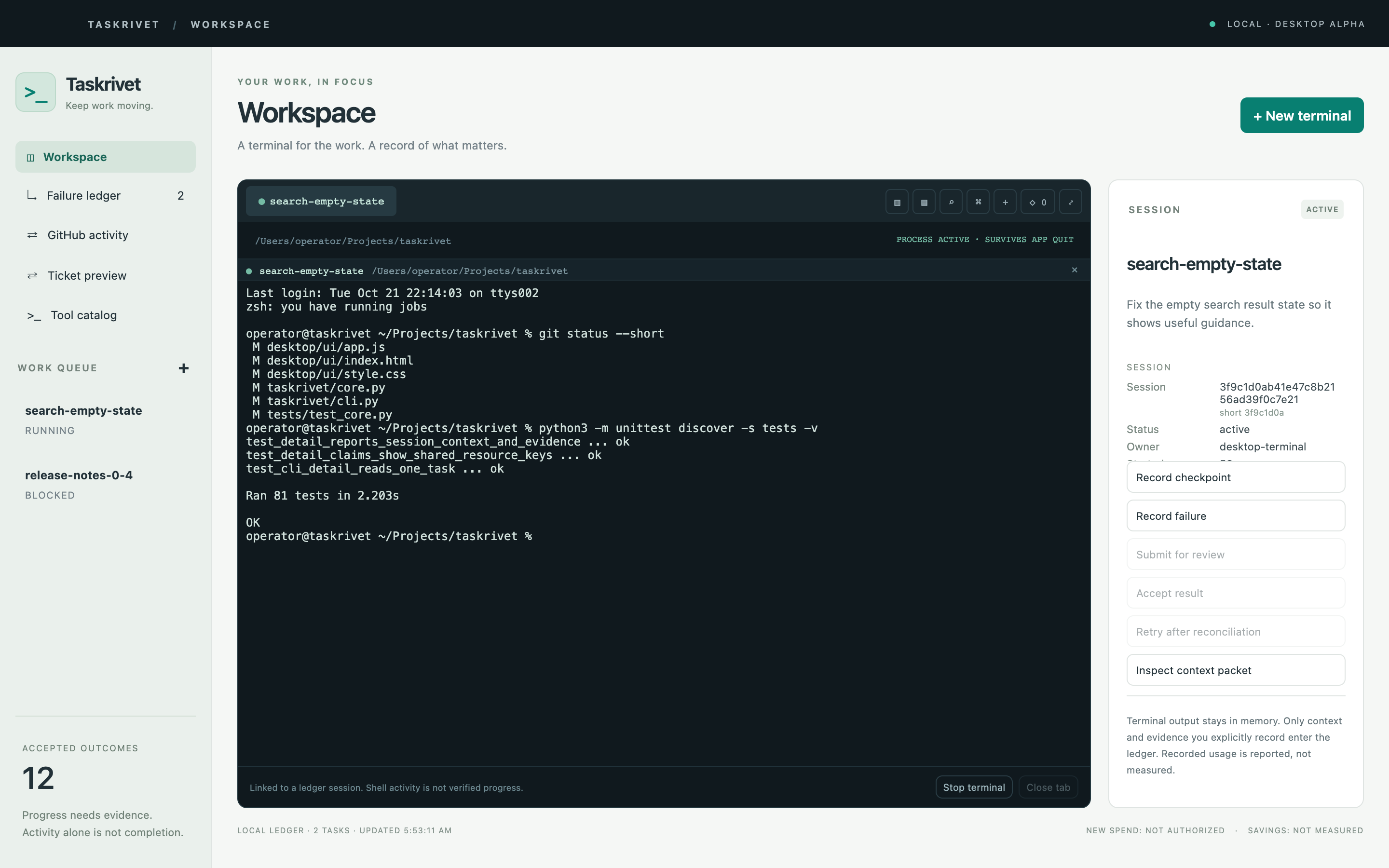
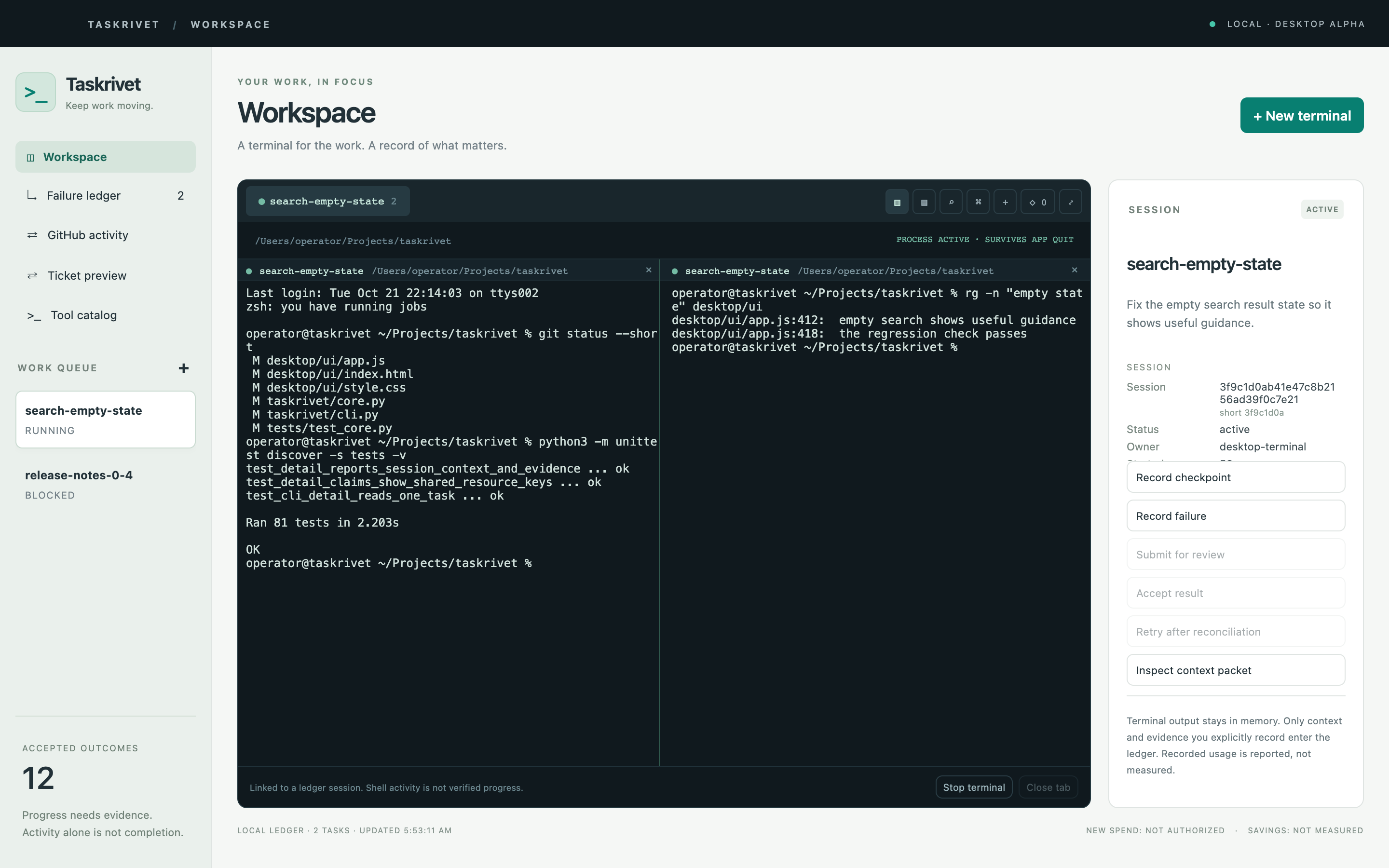
Each pane keeps its session, task, context, and evidence in view. These captures render the real workspace interface with synthetic data.
Session inspector: session, lease, task, resource scope, bounded context, checkpoints, failures, and the ledger event trail.Split panes. A second pane may join the same ledger session instead of claiming a new lease.
Captures come from the workspace renderer driven by a synthetic bridge. They show the interface, not a live run, and the values shown are records rather than measured facts.
08 / Build with us
Follow the work. Shape what comes next.
The focused roadmap tracks qualified ticket execution. Existing planning entries need scope and acceptance review before they become implementation work.